- (808) 799-5747
- sales@pearlharborofficial.com
- Honolulu, Hawaii 96815
© 2026 Pearl Harbor Official. All rights reserved.
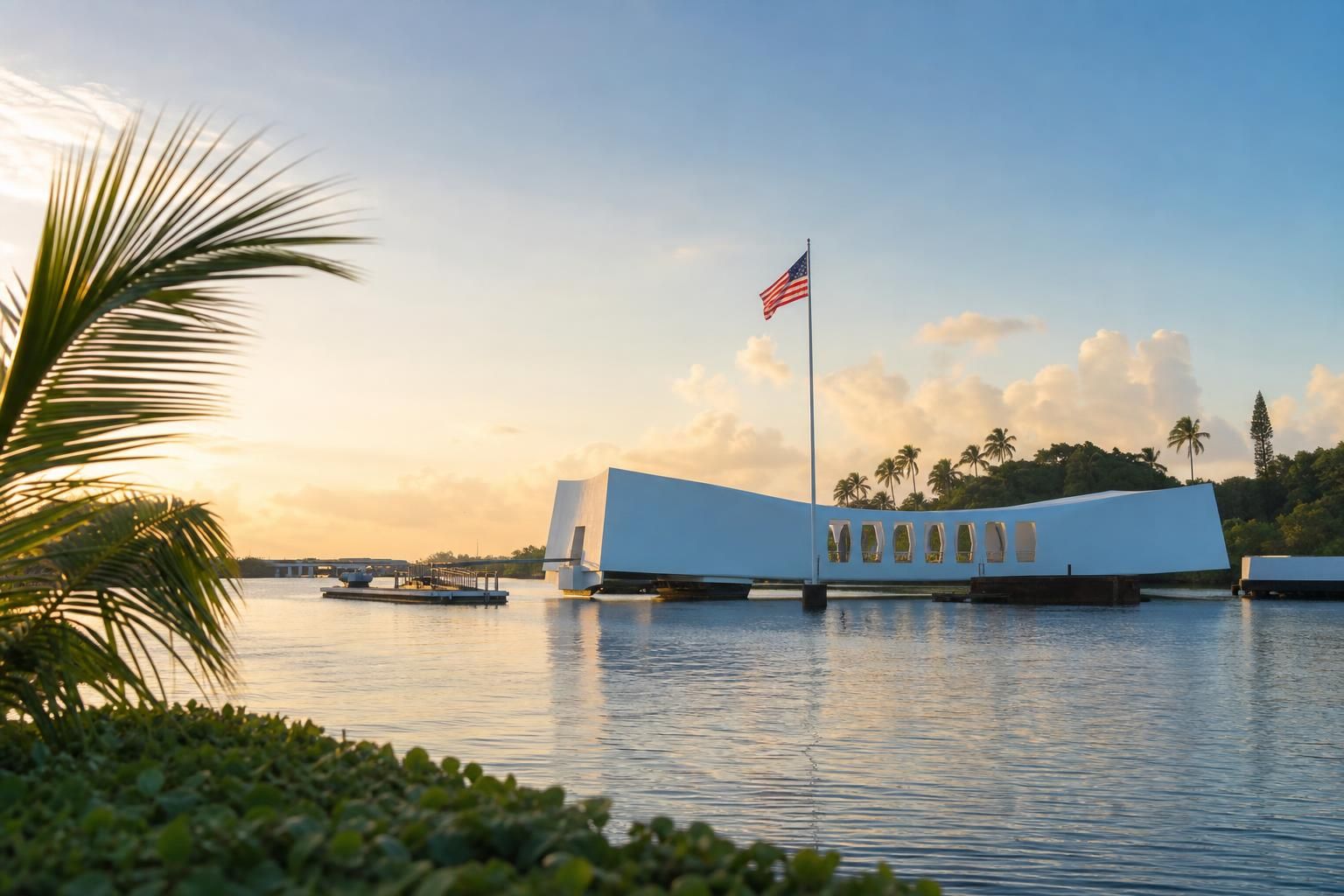
The best time to visit Pearl Harbor Memorial is on a weekday morning between January and April, arriving at or before opening, since crowds and ticket demand are lightest outside of summer break and the December 7 anniversary week. Early arrival also means cooler, calmer weather before Oahu’s trade winds and midday sun pick up. Booking your memorial boat ticket or guided tour in advance matters more than the season, because same-day availability at the site is limited regardless of time of year.
Key takeaways
Visitor volume at the USS Arizona Memorial follows Oahu’s tourism patterns rather than a fixed calendar. School summer vacation (roughly June through August) and the winter holidays bring the largest numbers of visitors, while January and February — outside of the New Year’s holiday stretch — tend to see the fewest. Shoulder months like March, April, September, and October fall in between, with noticeably shorter lines than peak summer but not quite the quiet of deep winter.
Day of the week matters too. Tuesdays through Thursdays generally move faster than Saturdays and Mondays, since many multi-day itineraries route visitors to Pearl Harbor at the start or end of a trip. If your schedule is flexible, choosing a mid-week day in the off-peak months stacks the odds in your favor.
The National Park Service–run visitor center at Pearl Harbor National Memorial opens early, and the first timed programs of the day are consistently the least crowded. Arriving close to opening also means shorter security-screening lines, since the site uses an airport-style checkpoint before entry.
By late morning, tour buses and independent visitors converge, and the boat shuttle out to the memorial itself starts running at capacity. Afternoon programs can also be affected if wind or sea conditions require the Navy to pause boat operations, which happens periodically at this open-water site. Visitors on a half-day tour schedule benefit most from an early pickup, since it locks in an earlier program time before the day fills up.
Honolulu’s climate stays fairly consistent year-round, with average highs in the low-to-mid 80s Fahrenheit and lows in the low-to-mid 70s, according to NOAA’s National Weather Service. The more relevant seasonal difference is rainfall: the wetter season runs roughly November through March, with brief, passing showers rather than prolonged storms, while May through October is drier with steadier trade winds.
Because much of a Pearl Harbor visit happens outdoors — walking between sites, waiting for the boat, standing on the memorial itself — a slightly overcast, breezy morning in the wetter months can actually be more comfortable than a still, humid midday in July. Sun protection and a light rain layer are worth packing regardless of month.
| Time of Year | Crowd Level | Typical Weather | Booking Advice |
|---|---|---|---|
| Jan–Feb (after New Year’s) | Lightest of the year | Mild, brief showers possible | Book 1–2 weeks ahead |
| Mar–May | Moderate, rising | Drier, steady trade winds | Book 2–3 weeks ahead |
| Jun–Aug (summer break) | Heaviest of the year | Warm, sunny, low rain | Book 4+ weeks ahead |
| Sep–Nov | Moderate, cooling | Transitioning toward wet season | Book 2–3 weeks ahead |
| Dec 1–7 (anniversary week) | Very heavy, ceremony traffic | Mild | Book months ahead |
The week surrounding December 7 draws visitors specifically for the Pearl Harbor attack anniversary, including a public commemoration ceremony that adds security measures and access changes at the memorial. Ticket demand for both the ceremony and regular memorial programs rises sharply, and some site access is restricted for parts of that week. Anyone planning a trip around that date should read up on what to expect during the anniversary period well before booking flights or hotels.
Regardless of season, the memorial boat program only runs so many visitors through per day, and free walk-up tickets released at the visitor center go quickly, often within the first hour or two of release. This is the main reason travel advisors recommend securing tickets in advance rather than relying on a quiet-season assumption. If you arrive without a reservation and find the day’s allotment gone, there are still practical next steps, covered in what to do when Pearl Harbor tickets are sold out.
Guided tour operators, including Pearl Harbor Official, build reserved memorial tickets into their scheduled departures specifically to remove this timing risk for visitors who don’t want to track release windows or arrive before dawn. For most travelers comparing options, the real decision point is less about picking a “perfect” week and more about choosing the right type of tour for the pace and group size you’re traveling with.
Q: What is the least crowded month to visit Pearl Harbor Memorial?
January and February, outside of the New Year’s holiday stretch, typically see the fewest visitors. Crowds build steadily from March onward and peak during summer school break.
Q: What time of day should I arrive at the memorial to avoid lines?
Arriving at or shortly after the visitor center opens gives you the shortest security and ticket lines, since demand builds through the late morning and afternoon.
Q: Does weather affect whether the boat to the USS Arizona Memorial runs?
Yes. The boat shuttle to the memorial is operated on open water, so the National Park Service and Navy can pause or adjust the schedule during high winds or rough conditions, which occasionally affects afternoon programs more than early ones.
Q: Is the week of December 7 a good time to visit?
It’s meaningful for visitors interested in the commemoration ceremony, but it’s also the busiest week of the year, with added security measures and some access changes, so advance planning is essential.
Q: Does booking a guided tour help avoid ticket sellouts?
Guided tours that include reserved memorial tickets remove the need to track daily ticket releases yourself, which is useful during peak season or if your schedule can’t accommodate an early-morning walk-up line.