- (808) 799-5747
- sales@pearlharborofficial.com
- Honolulu, Hawaii 96815
© 2026 Pearl Harbor Official. All rights reserved.
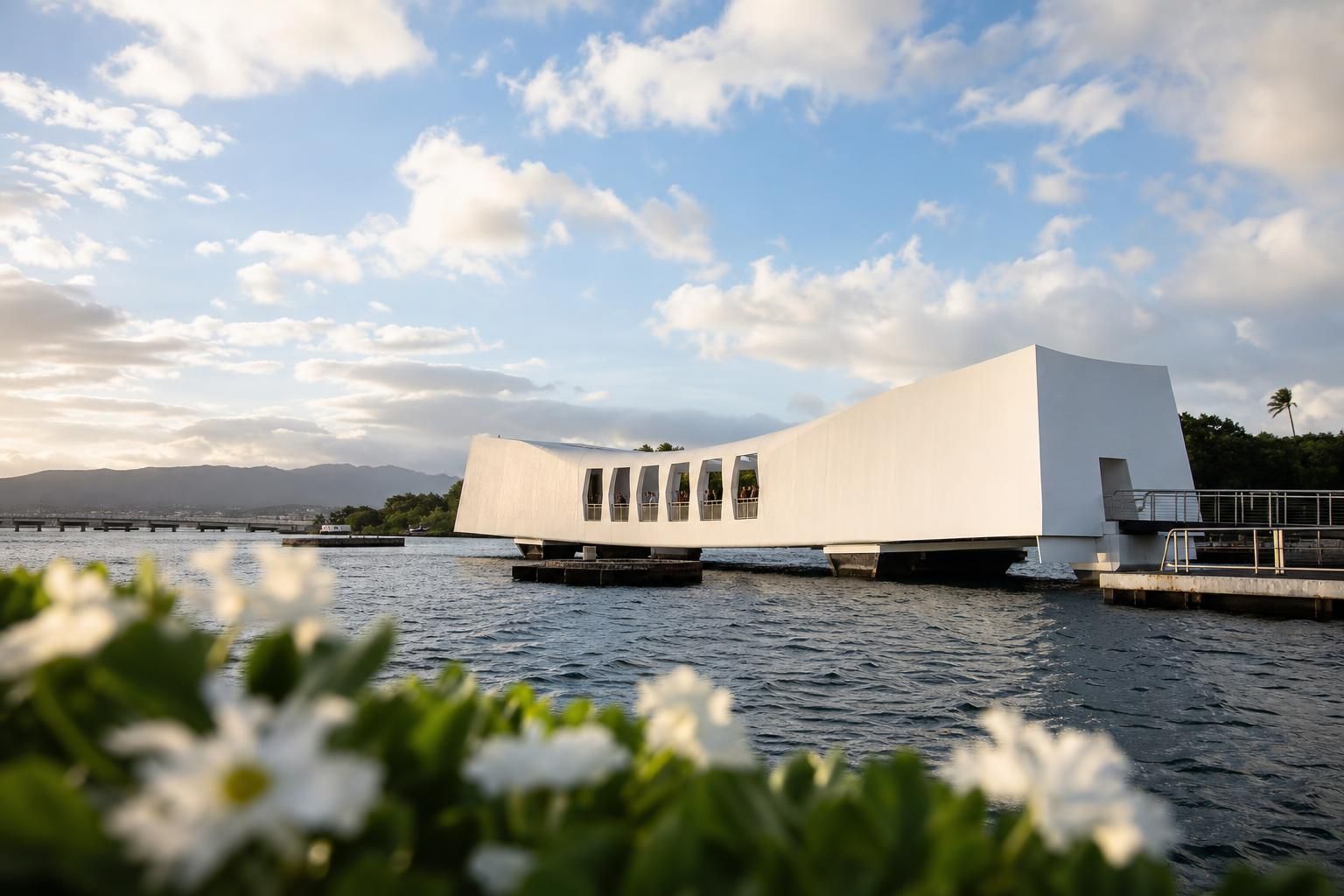
Pearl Harbor is important because the December 7, 1941 attack brought the United States into World War II, reshaped American military and foreign policy for generations, and claimed more than 2,400 lives in a single morning. The site is now preserved as a national memorial where visitors can see the sunken USS Arizona, stand aboard the Battleship Missouri, and learn directly from exhibits built around survivor accounts and original wartime records. Its importance is both historical — a turning point that changed the course of the 20th century — and personal, as a place where families still come to honor relatives who served.
Key takeaways
On the morning of December 7, 1941, Japanese aircraft launched a surprise attack on the U.S. Pacific Fleet stationed at Pearl Harbor, Oahu. In under two hours, the assault sank or damaged 19 U.S. Navy vessels and destroyed more than 300 aircraft. The USS Arizona alone lost 1,177 crew members when a bomb detonated its forward ammunition magazine — the single deadliest loss of any ship that day. President Franklin D. Roosevelt called December 7 “a date which will live in infamy” in his address to Congress, and the United States formally entered World War II the following day. For a fuller breakdown of the timeline and what occurred ship by ship, see what happened at Pearl Harbor on December 7, 1941.
Before the attack, the United States had maintained official neutrality while supplying aid to Allied nations. Pearl Harbor ended that posture overnight. Within days, the U.S. was fighting a two-front war against Japan and Germany, and the industrial and military mobilization that followed reshaped the American economy for the rest of the decade. Historians and the National WWII Museum point to Pearl Harbor as the single event that transformed U.S. public opinion from isolationist to fully committed to the war effort. That shift in policy, more than any other single battle, is why the attack is treated as a hinge point in 20th-century history rather than just one military engagement among many.
The numbers from that morning remain difficult to absorb even decades later. More than 2,400 American service members and civilians died, and over 1,100 more were wounded. Many of those lost were teenagers and young enlisted sailors who had been stationed at Pearl Harbor for routine duty, not combat. Understanding the scale and distribution of these losses — across ships, air stations, and civilian areas — helps explain why the memorial today is treated with the same solemnity as a cemetery. A detailed accounting of casualties by location is available in how many people died at Pearl Harbor.
The white structure that spans the sunken USS Arizona was built not as a monument to victory but as a resting place. More than 900 of the ship’s crew remain inside the hull, and oil still rises slowly from the wreck — a visible, ongoing reminder of the loss. The National Park Service, which manages the Pearl Harbor National Memorial alongside the U.S. Navy, maintains the site specifically so visitors can learn the history firsthand rather than through secondhand retellings. Guided tours typically pair the memorial visit with access to Battleship Missouri and Ford Island, which together show both the beginning and the end of the Pacific War story — the Missouri is where Japan formally surrendered in 1945. The Ford Island sites that round out that story are covered in Ford Island Pearl Harbor tour sites.
Military historians and the Naval History and Heritage Command continue to study Pearl Harbor because it exposed critical gaps in U.S. naval readiness, intelligence sharing, and base defense — lessons that directly influenced how the Navy structured warning systems and fleet dispersal for the rest of the war. The attack damaged or sank a significant portion of the battleships stationed at Pearl Harbor that day, though most were eventually repaired and returned to service, a detail that often surprises visitors expecting total destruction. A ship-by-ship summary of what was lost, salvaged, or returned to duty is laid out in how many ships were sunk at Pearl Harbor.
Reading about Pearl Harbor and standing at the memorial are genuinely different experiences. The National Park Service issues a limited number of memorial tickets each day, and the boat ride out to the Arizona is brief but deliberately quiet — most visitors describe it as the point where the history stops feeling abstract. Because same-day tickets can be unpredictable, many travelers planning a trip from Waikiki choose a guided option that includes reserved admission and a local guide who can explain the sequence of events as you move through the site. Pearl Harbor Official structures its tours around that reserved-ticket model specifically so families and groups aren’t left waiting in line or missing the memorial entirely.
A few practical details make a meaningful difference for first-time visitors:
For a season-by-season breakdown of crowd levels and timing, see the best time to visit Pearl Harbor Memorial, and for current opening hours and seasonal closures, check Pearl Harbor hours of operation.
Q: Why is Pearl Harbor considered historically important?
Pearl Harbor is historically important because the December 7, 1941 attack brought the United States into World War II, killed more than 2,400 Americans, and permanently changed U.S. military and foreign policy.
Q: Why is the USS Arizona Memorial significant?
The USS Arizona Memorial sits directly above the sunken battleship, which still holds the remains of more than 900 crew members, making it an active gravesite as well as a historic landmark.
Q: What lesson did the U.S. military learn from Pearl Harbor?
The attack revealed serious gaps in naval readiness, intelligence coordination, and base defense, prompting the Navy to overhaul warning systems and fleet positioning for the remainder of the war.
Q: Why do people still visit Pearl Harbor today?
Visitors come to honor those who died, understand a pivotal moment in world history firsthand, and see preserved sites like the USS Arizona and Battleship Missouri that mark both the start and end of the Pacific War.
Q: How long does it take to understand Pearl Harbor’s significance during a visit?
Most visitors need at least three hours to see the memorial, visitor center exhibits, and Battleship Missouri, though guided tours often pair this with additional Ford Island sites for fuller context.