- (808) 799-5747
- sales@pearlharborofficial.com
- Honolulu, Hawaii 96815
© 2026 Pearl Harbor Official. All rights reserved.
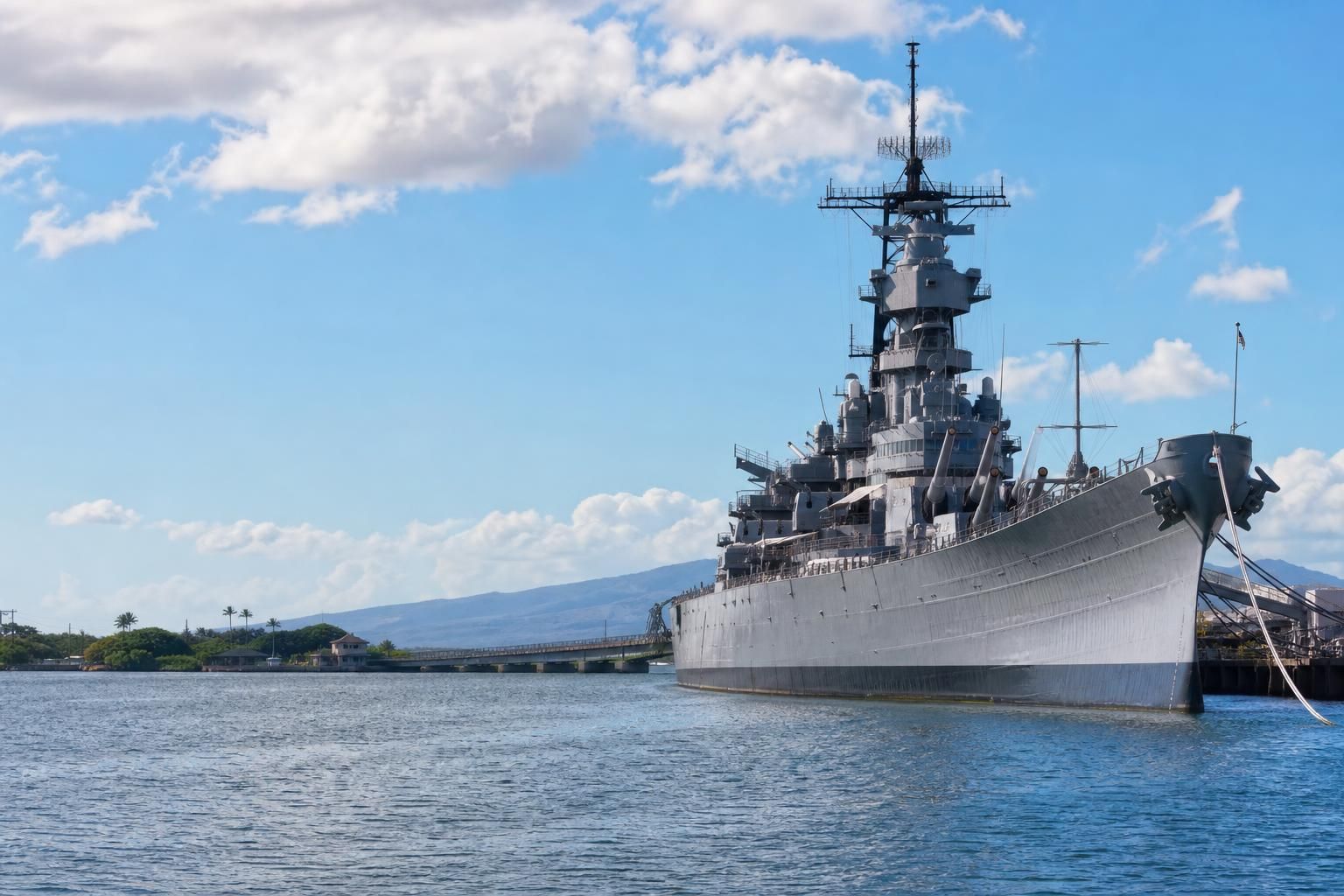
Ford Island sits in the middle of Pearl Harbor and holds the historic sites most visitors come to see, including the USS Arizona Memorial, the Battleship Missouri, the USS Bowfin submarine, and the Pacific Aviation Museum. A guided bus tour is the most practical way to reach the island, since access is restricted and requires crossing a secured Navy causeway. Most tours combine two or three of these sites into a single half-day or full-day itinerary.
Key takeaways
Ford Island was a working naval air station on December 7, 1941, and much of the attack unfolded around its runways and moorings. Today it remains an active Navy installation, which is why civilian visitors can’t simply drive onto it. Access runs through a single causeway bridge with security checkpoints, and tour operators and the National Park Service coordinate visitor movement through that bottleneck. This is also why walk-up visits can be unpredictable — bus tours with reserved slots tend to move through the process more smoothly than independent travelers arriving without a plan.
A typical Ford Island itinerary touches on some combination of the following:
Not every tour includes all four; half-day options usually focus on the Arizona Memorial with one additional stop, while full-day tours can cover the whole cluster. For a breakdown of which pacing suits your schedule, see this comparison of a half-day versus full-day Pearl Harbor itinerary.
Civilian access to Ford Island is managed jointly by the Navy and the National Park Service, since the island is still an active military base. Visitors pass through a security screening similar to airport protocols before crossing the causeway by shuttle or tour bus. According to the National Park Service, personal bags, purses, and camera cases are not permitted at the Arizona Memorial area, though small clear bags and cameras without cases are generally allowed — a detail that catches first-time visitors off guard and can slow down a group that isn’t prepared.
Because of this screening step, bus tours that build in extra time and brief travelers on bag rules ahead of arrival tend to move through more efficiently than groups arriving without guidance. This is one reason guided options are popular with families and larger parties who don’t want to manage logistics on-site.
The National Park Service issues a set number of USS Arizona Memorial boat tickets each day, split between advance online reservations and same-day releases. Because Pearl Harbor draws visitors year-round, same-day tickets can run out by mid-morning, particularly during summer and around the December 7 remembrance period. If you’re building a trip around a specific date, it’s worth reading up on what to do if Pearl Harbor tickets are sold out before you arrive, since backup plans exist but require some flexibility.
Reserved-ticket tour packages are one way travelers sidestep this uncertainty, since the memorial passes are secured as part of the booking rather than chased on arrival.
Pearl Harbor sits roughly 10-12 miles from Waikiki, and traffic on the H-1 freeway can stretch a drive that should take 25 minutes into much longer during morning rush hour. Ko Olina, on the west side of Oahu, is somewhat closer geographically but still requires navigating the same freeway corridor. Hotel pickup services are common precisely because of this commute variability, letting visitors skip parking logistics near the visitor center, which has limited on-site spaces. For a closer look at what a pickup-based itinerary looks like in practice, this guide to a Waikiki hotel pickup tour walks through the timing.
Pearl Harbor is an active memorial and a war grave — the USS Arizona still holds the remains of more than 900 sailors and Marines lost on December 7, 1941, according to the National Park Service. Tour guides generally ask for quiet, reflective behavior at the memorial itself, distinct from the more conversational tone appropriate at the aviation museum or submarine park nearby. Veterans groups and school tours are common throughout the year, and staff at the sites are accustomed to accommodating both solemn observance and educational curiosity in the same visit.
Q: Can I drive myself onto Ford Island to see Pearl Harbor sites?
No. Ford Island is an active Navy installation, and civilian vehicle access is restricted. Visitors reach the Battleship Missouri and Pacific Aviation Museum via a shuttle or tour bus that crosses the secured causeway after a security check.
Q: What’s the difference between the USS Arizona Memorial and the Battleship Missouri?
The USS Arizona Memorial marks the sunken battleship where the December 7, 1941 attack began, while the Battleship Missouri is a separate, preserved ship docked on Ford Island where the WWII surrender was signed in 1945. Many itineraries visit both to see the start and end of the war in the Pacific.
Q: Do I need to book USS Arizona Memorial tickets in advance?
It’s strongly recommended. The National Park Service releases a limited number of tickets daily, and same-day passes can run out, especially in peak travel season.
Q: Are bags allowed at the Arizona Memorial?
Purses, backpacks, and camera bags are not permitted in the memorial’s boarding area, though small clear bags and cameras without cases are typically fine. Storage lockers are available on-site for a fee if you arrive with restricted items.
Q: How long does a full Ford Island tour take?
A full itinerary covering the Arizona Memorial plus the Battleship Missouri or aviation museum typically runs a half or full day once you account for security screening, boat timing, and travel from Waikiki or Ko Olina hotels.